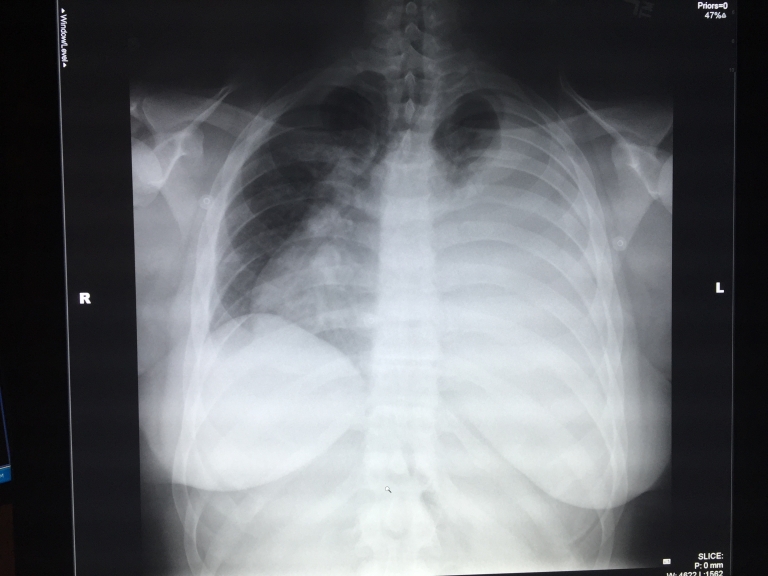
Central Necrosis on Radiology Reports: What It Means
When you see the phrase “central necrosis” on a radiology report, it refers to an area in the middle of a mass or tissue that has died. This finding is often detected on imaging studies such as CT scans, MRI, or ultrasound. For patients and families, the term can sound alarming, but understanding what it means in simple terms can help reduce anxiety and guide further discussions with doctors.
What Is Central Necrosis?
“Necrosis” means tissue death. When it is described as “central,” the dead tissue is located in the core of a structure—most often a tumor, lymph node, or abnormal growth. This happens because the cells in the center do not get enough blood supply, oxygen, or nutrients, so they break down and die.
Radiologists identify central necrosis because it changes the way a mass looks on imaging. Instead of being solid throughout, the middle looks different.
How Does Central Necrosis Appear on Imaging?
CT Scans
On CT, necrosis usually shows up as a darker (low-density) center inside a mass.
MRI
MRI provides even more detail. Necrotic tissue in the middle of a mass has a characteristic appearance. The outer part of the mass may enhance with contrast while the center remains non-enhancing.
Ultrasound
On ultrasound, central necrosis can look like an area that does not reflect sound waves well, often described as “hypoechoic” or “cystic.”
Why Does Central Necrosis Happen?
There are several reasons tissue in the center of a mass might die:
-
Rapid tumor growth: Some cancers grow so quickly that the blood supply cannot keep up. The inner cells are starved and die.
-
Infection or abscess: Infected tissue can break down and form a pocket of pus or necrotic debris.
-
Poor blood flow: Lack of adequate circulation in certain tissues may cause central breakdown.
Is Central Necrosis Always Cancer?
No, central necrosis does not always mean cancer. While it is often associated with aggressive tumors, it can also be seen in benign (non-cancerous) conditions:
-
Infected lymph nodes (from tuberculosis or bacterial infection)
-
Abscesses (collections of pus due to infection)
-
Benign tumors that outgrow their blood supply
However, when radiologists mention central necrosis, they usually consider it an important feature because it can raise concern for malignancy, depending on the overall context.
Common Places Central Necrosis Is Found
-
Lymph nodes: Necrotic lymph nodes may suggest infection or metastatic cancer.
-
Liver masses: Some liver tumors, both benign and malignant, can develop central necrosis.
-
Lung lesions: Certain lung cancers and infections like tuberculosis can develop central necrosis.
-
Soft tissue tumors: Sarcomas and other fast-growing masses may show this pattern.
Clinical Significance
When It Suggests Cancer
Central necrosis in a mass often raises suspicion for aggressive tumors. For example, head and neck cancers commonly spread to lymph nodes, and necrosis in those nodes can be a sign of metastatic disease.
When It Suggests Infection
Necrosis involving lymph nodes or organs can be related to infections like tuberculosis or bacterial abscesses. In these cases, further testing and clinical correlation are important.
Role in Treatment Decisions
Doctors use the presence of central necrosis, along with other imaging and clinical findings, to decide if a biopsy, surgery, or additional tests are needed. It can also help in staging cancers and planning therapy.
How Radiologists Report Central Necrosis
Radiology reports may use terms such as:
-
“Central low attenuation” or “non-enhancing centrally” (on CT)
-
“Non-enhancing central region” (on MRI)
-
“Central hypoechoic area” (on ultrasound)
These are different ways of describing a centrally necrotic mass.
What Patients Should Know
-
Central necrosis is a descriptive imaging finding, not a final diagnosis.
-
It often prompts further evaluation—biopsy, lab work, or follow-up imaging.
-
Its significance depends on the patient’s age, symptoms, medical history, and the location of the finding.
Conclusion
Central necrosis on imaging means that part of a mass or tissue has died in the center. While it can be seen in aggressive tumors, it is also present in infections and other non-cancerous conditions. Correlating the imaging findings with the clinical picture is essential. Patients should discuss the results with their doctor to understand what it means in their specific case.
References
https://pmc.ncbi.nlm.nih.gov/articles/PMC4364293/
https://pmc.ncbi.nlm.nih.gov/articles/PMC5581765/
https://radiopaedia.org/articles/necrosis-1